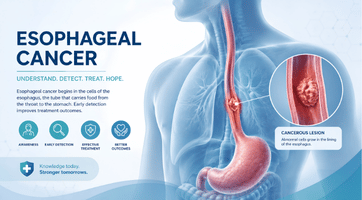
Esophageal cancer is a type of cancer that occurs in the esophagus, the muscular tube that connects the throat to the stomach. This cancer typically begins in the cells lining the inside of the esophagus and can occur anywhere along its length.
There are two main types of esophageal cancer: squamous cell carcinoma and adenocarcinoma.
Squamous cell carcinoma: This type of esophageal cancer usually starts in the thin, flat cells lining the inner surface of the esophagus. It often occurs in the upper and middle parts of the esophagus and is strongly associated with factors such as tobacco and alcohol use.
Adenocarcinoma: This type of esophageal cancer typically begins in the cells of mucus-secreting glands in the lower part of the esophagus. It is often linked to gastro esophageal reflux disease (GERD). Adenocarcinoma is more common in the lower part of the esophagus near the stomach.
Risk Factors for Esophageal Cancer
Factors That May Increase the Risk of Esophageal Cancer
Several lifestyle, medical, and dietary factors can increase the risk of esophageal cancer. Understanding these risk factors can help with early prevention, timely diagnosis, and appropriate treatment.
Tobacco & Alcohol Use
Smoking and heavy alcohol consumption are major risk factors for esophageal cancer.
Gastroesophageal Reflux Disease (GERD)
Chronic acid reflux can damage the lining of the esophagus and increase the risk of adenocarcinoma.
Age & Gender
Esophageal cancer is more common in older adults, and men are at higher risk than women.
Obesity
Being overweight or obese increases the risk, especially for esophageal adenocarcinoma.
Dietary Factors
A diet low in fruits and vegetables and high in processed meats may contribute to the risk.
Symptoms of Esophageal Cancer
Recognize the Early Warning Signs
Esophageal cancer often develops gradually, and its symptoms may become more noticeable as the disease progresses. If you experience any of the following symptoms, consult a surgical oncologist for timely evaluation.
Difficulty in Swallowing
One of the most common symptoms, especially while swallowing solid foods, caused by narrowing of the esophagus.
Unintentional Weight Loss
Significant weight loss may occur due to difficulty in eating and swallowing.
Chest Pain or Discomfort
Pain or discomfort behind the breastbone may occur as the tumor presses on nearby structures.
Persistent Cough
A chronic cough with hoarseness or voice changes may develop due to irritation caused by the tumor.
Heartburn or Acid Reflux
Persistent heartburn or acid reflux that does not respond to routine treatment may be associated with esophageal cancer.
Diagnosis of Esophageal Cancer
Tests Used to Diagnose Esophageal Cancer
An accurate diagnosis of esophageal cancer is essential for determining the stage of the disease and planning the most appropriate treatment. Common diagnostic tests include:
Endoscopy
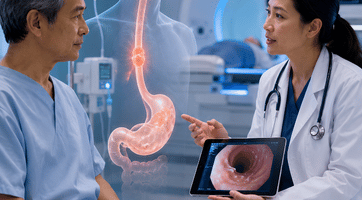
A thin, flexible tube with a camera (endoscope) is passed through the mouth and into the esophagus to visually inspect the lining. Biopsies may be taken during this procedure.
Biopsy
Small tissue samples are collected during endoscopy or other procedures to examine under a microscope for the presence of cancer cells.
Imaging Tests
Imaging tests include CT scan and PET scan.
Endoscopic Ultrasound (EUS)
Combines endoscopy with ultrasound to assess the depth of tumor invasion and involvement of nearby structures.
Treatment of Esophageal Cancer
Comprehensive Treatment Options
The treatment of esophageal cancer depends on the stage, location, and overall health of the patient. Common treatment options include:
Esophagectomy
Removal of part or all of the esophagus, often accompanied by removal of nearby lymph nodes.
Minimally Invasive Surgery
Some cases may be treated with laparoscopic or robotic-assisted techniques.
Chemotherapy
Drugs are used to kill cancer cells or slow their growth. It can be administered before or after surgery.
External Beam Radiation
Directed at the tumor from outside the body.
Brachytherapy
Internal radiation delivered directly to the tumor.
Combination Therapy
Often, a combination of surgery, chemotherapy, and radiation therapy is used to maximize effectiveness.
Targeted Therapy & Immunotherapy
These newer approaches focus on specific molecules involved in cancer growth or enhance the body's immune response against cancer cells.
Early detection and intervention are crucial for improving the prognosis of esophageal cancer. If you or someone you know is experiencing symptoms or has risk factors, it is important to seek medical attention promptly. Regular check-ups and screenings are also recommended for individuals at higher risk.
Frequently Asked Questions
Find answers to common questions about Esophageal Cancer Surgery, diagnosis, treatment options, recovery, and postoperative care.