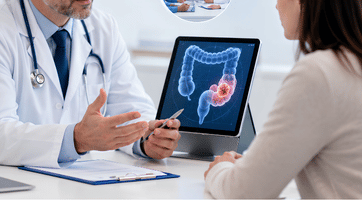
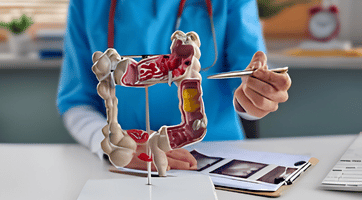
The large intestine (colon) is where colorectal cancer, also known as bowel cancer,
first appears. The digestive system ends with the intestine. Healthy cells transform
and develop out of control in the rectum or colon lining, where cancer initially shows
up as a mass or lump known as a tumor.
Colon cancer can strike anyone at any age, but it typically affects adults more. First
symptoms of the disease are typically small, benign (non-cancerous) cell clusters
called polyps that develop on the interior of the colon. Colon cancer could ultimately
arise from some of the polyps.
The third most prevalent cancer in the world, colorectal cancer typically affects males
more frequently than women. Colon and gastrointestinal cancer can also be caused
by an inactive lifestyle.
Symptoms of Colon & Rectal Cancer
Recognize the Warning Signs
Colon cancer in its early phases frequently has no symptoms. The following signs and symptoms may appear as the disease progresses. Early evaluation by a specialist is important if these symptoms persist.
Change in Bowel Habits
Persistent constipation, diarrhea, or changes in bowel movements.
Abdominal Discomfort
Persistent abdominal pain, cramps, or discomfort.
Fatigue
Ongoing tiredness or weakness that does not improve with rest.
Weight Loss
Unexplained weight loss without changes in diet or physical activity.
Bloody Stool
Blood in the stool or rectal bleeding should always be evaluated promptly.
Diagnosis:
Doctors advise screening procedures to search for non-cancerous colon polyps or
signs of colon cancer in healthy individuals who exhibit no symptoms or signs. This
aids in early detection and increases the likelihood of a recovery.
According to doctor recommendations, screening can begin around the age of 45 for
those with an average chance of colon cancer.
Several tests and procedures, such as the following, may be advised by your doctor
if your symptoms and signs point to the existence of colon cancer:
1. Colonoscopy: An endoscopy is performed and a sample of the colon is taken to check for the growth of tumors.
2. Radiological Tests: A variety of radiological tests, including CT scans, PET scans, and MRIs, are carried out to help pinpoint the precise position and size of the tumor.
Treatment Options
Comprehensive Treatment for Colon & Rectal Cancer
Colon cancer is one of the most treatable cancers when detected early. Treatment depends on the stage of the disease (Stage 0-IV), the size of the tumor, lymph node involvement, and whether the cancer has spread (metastasized) to other parts of the body. A thorough evaluation helps determine the most appropriate treatment plan.
Surgery
Surgery is the primary treatment for most patients with colon and rectal cancer.
Polypectomy
Removal of polyps during a colonoscopy before they develop into cancer.
Endoscopic Mucosal Resection
Removal of early-stage cancer or large polyps through endoscopy.
Minimally Invasive Surgery
Laparoscopic surgery using small incisions for faster recovery.
Partial Colectomy
Removal of the cancerous section of the colon along with healthy surrounding tissue.
Lymph Node Removal
Nearby lymph nodes are removed to determine the extent of cancer spread.
Stoma Surgery
Surgery for the removal of waste from the body when normal bowel function cannot be restored immediately.
Chemotherapy
Uses anti-cancer drugs to destroy cancer cells or reduce the risk of recurrence.
Radiation Therapy
Uses high-energy radiation to destroy cancer cells, especially in rectal cancer.
Targeted Therapy
Targets specific molecules responsible for cancer growth in advanced disease.
Immunotherapy
Stimulates the immune system to recognize and destroy cancer cells in selected patients.
Robotic Surgery in Colorectal Cancer
As a seasoned expert in robotic surgery, Dr. Tapan Chauhan elaborates on the benefits of robotic-assisted procedures in colorectal cancer. This includes reduced invasiveness, enhanced visualization, and quicker recovery times. The integration of robotic technology in surgical oncology represents a significant advancement in improving patient outcomes.
Survivorship and Follow-up Care
Post-treatment, survivorship care becomes paramount. Dr. Chauhan underscores the importance of regular follow-up appointments, monitoring for recurrence, and addressing any long-term side effects. Survivorship care plans are personalized to each patient, considering their unique medical history and treatment journey.
Prevention and Lifestyle Choices
Preventive measures play a crucial role in reducing the risk of colorectal
cancer. Dr. Tapan Chauhan advocates for a healthy lifestyle, including a
balanced diet rich in fiber, regular exercise, and avoiding tobacco and excessive
alcohol consumption. Regular screenings and awareness campaigns contribute
to early detection and prevention.
Colorectal cancer is a complex disease that requires a comprehensive
understanding and a multidisciplinary approach for effective management. Dr.
Tapan Chauhan's insights provide valuable perspectives on the various aspects
of colorectal cancer, from risk factors to treatment modalities, with a special
focus on the role of robotic surgery in improving patient outcomes. Increased
awareness, early detection, and advancements in surgical techniques
collectively contribute to better outcomes for individuals facing colorectal
cancer.